By Claire Whitaker
Updated November 2026
Yoga blocks black friday deals can be a good time to stock up on props, but the sale price alone tells you little about whether a set will suit your practice. This guide walks you through what to check before you buy, how to compare sets quickly, and how to avoid the common mistakes that lead to returns. By the end, you will know which features matter for your poses and how to judge a listing in a few minutes.
Step 1: Decide What You Need the Blocks For
Blocks are simple tools, but the job you give them shapes the right purchase. Most home practitioners use them to bring the floor closer for standing poses, to support the hips and spine in seated postures, or to add height for restorative work. If you mainly want support in standing balances, a standard size will do. If you plan to use them under the hands in inversions or for weight-bearing, look more closely at firmness and surface grip. For ideas on how different poses use blocks, see Yoga Poses with Blocks: 6 Steps to Better Alignment and Support.
Shopping for one? See our guide: Foam vs Cork Yoga Blocks (2026): Which Is Better for Your Practice?.
Step 2: Compare Material, Size and Density
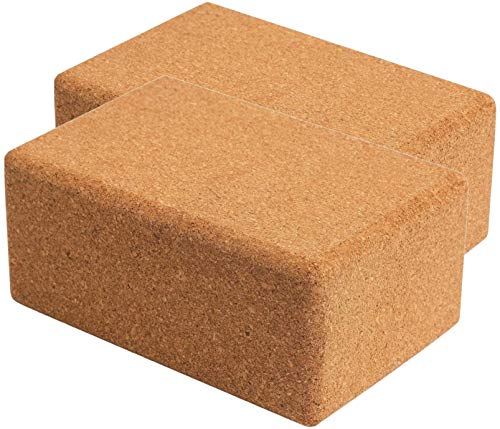
Most blocks sold for yoga are made from cork, foam or wood, and each behaves differently under load. Cork is dense and firm, with a natural grip. Foam is lighter and softer, which can feel easier on the hands but may compress under weight. Wood is sturdy and stable, though it can feel hard on the wrists. Check the listed dimensions, usually given as length by width by height in inches, and make sure the height works for your body. A block that is too tall can push you out of alignment just as easily as one that is too low.
Step 3: Check Surface Grip and Stability
A block that slides on a wood or vinyl floor creates more risk than benefit. Look for descriptions of textured or non-slip surfaces, and check whether the product says it is designed for weight-bearing. Owners often report that smooth-surfaced foam blocks slip more than cork ones, so read reviews with that in mind. If you practice on a slick floor, a mat with good grip can help. For a combined setup, see Yoga Mat and Blocks Set: How to Choose and Use One for Home Practice.
Step 4: Decide on the Number and Bundle
Two blocks are the standard for most poses, and many practitioners find a pair sufficient for years. Sets sometimes include a strap or a bolster, which can be useful if you plan to use those tools too. Only buy extras you will actually use. A bundle with a bolster makes sense for restorative practice, but adds little if you only want standing support.
Checklist Before You Buy
- Confirm the material suits your use: cork or wood for firm support, foam for lighter, softer contact.
- Check the dimensions and confirm the height works for your standing and seated poses.
- Look for a non-slip or textured surface described in the product details.
- Read the return policy so you can exchange the set if it feels wrong.
- Compare two or three listings side by side rather than buying the first deal you see.
Common Mistakes
- Buying on the discount alone without checking height and material.
- Choosing very soft foam for weight-bearing poses, where it may compress.
- Skipping the return window, which makes a poor fit harder to fix.
- Buying extra accessories you will not use in your regular practice.
- Using blocks on a slippery floor without a mat or grip.
Recommended Gear
A firm cork block is a practical choice for daily standing support because it holds its shape and grips the floor well. View on Amazon
A pair of foam blocks can suit beginners who want a lighter, softer contact for seated and restorative poses. View on Amazon
FAQ
Are yoga blocks worth buying on Black Friday?
They can be, if the set matches your needs and you verify the material, size and return policy before you buy. Sale timing matters less than fit.
Is cork or foam better for yoga blocks?
Cork is firmer and more stable for weight-bearing, while foam is lighter and softer. Choose based on the poses you practice most.
How many yoga blocks do I need?
Two is the usual number for most poses. Add more only if your practice regularly calls for extra height or support.
Conclusion
Shopping yoga blocks black friday listings is easiest when you know what you need first. Focus on material, height, grip and the return policy rather than the sale tag alone. Check the official product details for current pricing and availability before you order.
Related reading
Ready to choose one?
About Claire Whitaker
Claire Whitaker is part of our editorial team and reviews and edits our yoga guides, checking product details against manufacturer specifications and owner feedback.