By Declan Maddox
As an Amazon Associate I earn from qualifying purchases. This page may contain affiliate links.
A yoga mat and blocks set gives you the two most useful pieces of basic equipment in one purchase, and choosing the right combination can make your home practice safer and more comfortable. In this guide, you will learn how to match a mat’s thickness and grip to your style, how to pick blocks that support your body rather than fight it, and how to use the pair together in common poses. By the end, you should be able to shop with a clear checklist and set up a practice space that works for you.
Why a Mat and Blocks Work Well Together
A mat controls what happens under your hands and feet, while blocks change the distance between your body and the floor. Used together, they let you adjust almost any standing, seated or balancing pose to your current flexibility. A tight hamstring, short arms or a sore wrist can all be accommodated without giving up the pose entirely. For many people practicing at home, this pairing covers most of what a class would provide.
Blocks are also useful for restorative work, where they support the hips, back or head while you rest. If you plan to practice seated or lying-down postures often, a mat and blocks set is likely to get more use than a mat alone. For a broader look at prop types, see Yoga Props Buying Guide.
Step 1: Decide What Your Practice Needs
Before comparing products, write down how you plan to practice. The right mat for slow, floor-based stretching is not always the right mat for fast vinyasa or hot classes. Think about these questions:
- Which styles will you practice most: Hatha, vinyasa, yin, restorative or power yoga?
- Will you practice on hard floors, carpet or an uneven surface?
- Do you sweat heavily, and will you need extra grip?
- Do you need to carry your mat to class or outdoors?
- Do you have wrist, knee or back sensitivity that calls for more cushioning?
Your answers will narrow the thickness, material and block design you should look for. If you are still deciding where to start, Yoga Mats for Beginners covers the basics.
Step 2: Choose the Right Mat Thickness and Material
Thickness affects cushioning and stability. Thin mats, often around 1.5 to 3 mm, give you more ground contact and better balance feedback, which many experienced practitioners prefer. Mats in the 4 to 6 mm range offer more padding for knees, hips and wrists but can feel wobbly in standing balances. Most manufacturers list thickness in millimeters on the product page, so check that number before you buy.
Material matters as much as thickness. Common options include:
| Mat material | Typical feel | Good for | Keep in mind |
|---|---|---|---|
| PVC | Firm, durable, good grip when new | General practice, studio use | Less eco-friendly; some people dislike the smell |
| TPE | Softer, lighter, moderate grip | Home practice, travel | Grip can decline with heavy sweating |
| Natural rubber | Grippy, dense, heavier | Hot or sweaty practice, outdoor use | Can have a rubber odor at first |
| Cork | Firm, natural texture, grip improves with sweat | Balance-focused practice | Heavier and less cushioned |
For a deeper comparison of thicknesses, read Yoga Mat Thickness Guide. If you are weighing a mat for heated sessions, How to Choose a Yoga Mat walks through grip and texture in more detail.
Step 3: Pick Blocks That Fit Your Body and Practice
Blocks come in a few main materials, and each one feels different under your hands. Foam blocks are light and forgiving. Cork blocks are firmer and more stable. Wood blocks are dense and sturdy but can be heavy and slippery when hands are sweaty. Most blocks are sold as a pair in a standard size, usually around 9 by 6 by 4 inches, though specifications vary by brand, so check the listed dimensions.
Consider the following when comparing blocks:
- Density: Firm blocks support heavier poses like bridge or standing splits. Softer blocks suit restorative poses.
- Surface texture: A slightly textured surface helps prevent slipping.
- Height options: Some blocks have a second height or a cutout for different levels of support.
- Weight: Lighter blocks are easier to move around, but heavier ones stay put on the floor.
For a side-by-side look at materials, see Yoga Block Materials Compared and Foam vs Cork Yoga Blocks (2026): Which Is Better for Your Practice?. If you want to understand what blocks are used for before you buy, Yoga Blocks Explained is a useful starting point.
Step 4: Check the Set’s Fit and Compatibility
A mat and blocks set is only useful if the two parts work well together. Lay the mat flat and place the blocks on it. The blocks should sit without sliding, and the mat should be wide enough for your hands and feet in wide-legged poses. Most standard mats are about 24 inches wide and 68 to 72 inches long. Taller practitioners may want a longer mat, and wider mats give more room for twists and lunges.
Also check whether the set includes a carrying strap or bag. Carrying options matter if you commute to class. For bag options, see Best Yoga Mat Bags.
Step 5: Set Up Your Practice Space
Once your gear arrives, set it up so that you can practice without interruption. Place the mat on a flat, non-slip surface, away from sharp corners and furniture. Keep the blocks within reach so you do not need to stand up in the middle of a sequence. In small rooms, a folded mat can be stored upright in a corner, and blocks can be stacked. For more ideas, see Yoga in Small Spaces.
Basic Tools and Items Checklist
- A mat with a thickness that suits your joints and balance
- A pair of blocks in a material you find comfortable
- A strap, if you plan to use one for reach in seated or standing poses
- A towel for sweat or extra grip on hot days
- A carry bag or strap for transport
How to Use a Yoga Mat and Blocks Set in Common Poses
The following examples show how blocks support a range of poses. Always move within a comfortable range and stop if you feel sharp pain.
Triangle Pose (Trikonasana)
Place one block at the highest setting against your shin, or on the outside of your front foot if your hamstrings are tight. Lower your hand onto the block instead of the floor, keeping your spine long. This reduces strain on the lower back and hamstrings.
Standing Forward Fold (Uttanasana)
Set your hands on blocks at the middle or highest height. The blocks bring the floor closer, letting you keep a slight bend in the knees and a flat back. Hold for five to ten breaths.
Supported Bridge (Setu Bandha Sarvangasana)
Place a block at its lowest height under your sacrum once your hips are lifted. Rest your weight on the block and relax your legs. This is a restorative variation that supports the lower back and lets you hold the pose longer.
Seated Forward Fold
Sit on the edge of a block to tilt your pelvis forward. This is especially helpful if you cannot sit upright with straight legs without rounding your back.
Common Mistakes to Avoid
- Choosing thickness only by feel in the store. A mat that feels fine for ten seconds may not suit a full session. Try to test it while standing and balancing if possible.
- Using blocks that are too high. Starting at the highest height in every pose can make the pose feel unstable. Begin lower and move up as your range improves.
- Ignoring grip when sweaty. Wood or smooth foam blocks can slip. Wipe them dry between uses.
- Skipping care instructions. Most mats should be cleaned with mild soap and water and air-dried. Check the manufacturer’s care guide.
- Pushing into pain. Blocks are meant to reduce strain, not add it. If a pose hurts, adjust the height or skip it.
Tips for Getting the Most from Your Set
- Start with a medium block height and adjust as you learn your range.
- Use blocks for alignment cues, such as placing a block between the thighs for inner-leg engagement in bridge pose.
- Rotate your mat’s position on the floor occasionally so it wears evenly.
- If you are new to props, read Yoga Tips for Beginners and Yoga Terms for Beginners to build confidence with common cues.
Recommended gear
Each of these items fits the practice described above. Look for the same product type and check specifications before you buy.
- Manduka PRO Yoga Mat: A dense, durable mat often recommended for practitioners who want long-lasting cushioning and a stable base in standing poses. View on Amazon
- Gaiam Essentials Thick Yoga Mat: A thicker, budget-friendly mat suited to floor work and gentle practice. View on Amazon
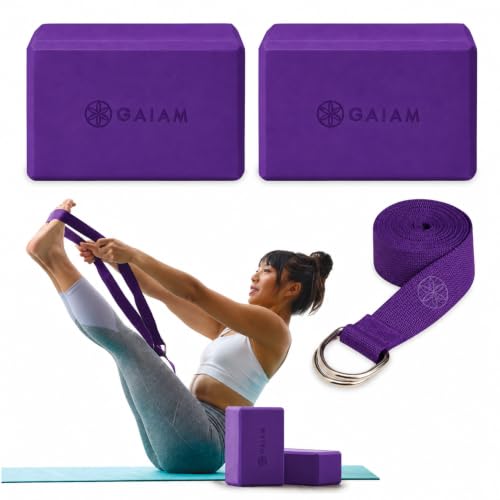
- Gaiam Yoga Block: A lightweight foam block that works well for beginners and restorative poses. View on Amazon
- Manduka Cork Yoga Block: A firmer cork block for practitioners who want more stability in standing and balance postures. View on Amazon
FAQ
Do I need both a mat and blocks to start yoga at home?
A mat is the essential item. Blocks are helpful but not required for every style. Many beginners start with a mat and add blocks once they want to modify poses for flexibility or comfort.
What thickness is best for a yoga mat and blocks set?
Thinner mats around 3 mm suit balance and standing work, while mats in the 4 to 6 mm range suit joint cushioning. Your choice depends on your practice style and any sensitivity in your knees or wrists.
Are foam or cork blocks better?
Foam blocks are lighter and softer, which many beginners find comfortable. Cork blocks are firmer and more stable for balance poses. Neither is universally better; it depends on your preference and practice.
How many blocks should I have?
Two blocks are the standard. Two blocks let you support both hands or both sides of the body evenly in most poses.
How do I clean a yoga mat and blocks?
Wipe mats with a diluted mild soap solution and let them air-dry flat. Wipe foam or cork blocks with a damp cloth and allow them to dry fully. Always follow the manufacturer’s care instructions.
Can I use blocks for stretching at home?
Yes. Blocks are commonly used for supported stretches and restorative poses. If you have an injury or chronic pain, consult a qualified healthcare provider or physical therapist before starting a new routine.
How long does a yoga mat usually last?
Lifespan depends on use, cleaning and material. Many practitioners replace a mat when the grip wears down, the surface cracks or the cushioning flattens noticeably.
Should I buy a mat and blocks set or buy them separately?
A set can be convenient and ensures the pieces are designed to work together. Buying separately lets you choose the exact thickness and block material you prefer. Compare both options against your practice needs.
Conclusion
A yoga mat and blocks set can cover most of what you need for home practice when you match its thickness, grip and block material to your style. Start by defining your practice, then compare mat materials and block densities. Set up your space so the equipment is easy to reach, and use blocks to adjust poses rather than force them. If you have any joint pain or medical concerns, check with a qualified professional before changing your routine.

About Declan Maddox
Declan puts together our yoga guides, digging through specifications, manufacturer details and owner reviews so you don't have to.