

 By Declan Maddox
As an Amazon Associate I earn from qualifying purchases. This page may contain affiliate links.
Choosing wooden blocks for yoga can feel simpler than it is. Wood, cork, and foam all sit under the same name, and the differences change how a block feels under your hands, how well it holds its position, and how it supports a long hold. This guide narrows the field to five wooden and wood-adjacent options and explains how each one fits a different kind of practice. Our selection criteria were based on published specifications, the reputation of the manufacturers, and recurring patterns in owner feedback. We did not physically test these products, so treat the notes below as a research-based comparison rather than hands-on findings.
Our Top Picks
Quick Comparison
| Product | Best for | Key feature |
|---|---|---|
| Solid Wooden Yoga Block Set of 2 (Premium Pine Wood Iyengar Yoga Blocks) | Traditional wood feel and paired home use | Solid pine with smooth, rounded edges |
| Hatha Yoga Cork Yoga Block (Natural Cork, Premium Brick 9″x6″x3″) | Grip-focused practice and eco-minded buyers | Natural cork surface with a standard brick size |
| Toddmomy Solid Wood Yoga Block (High Density Wooden Brick) | Restorative work and compact storage | High-density wood with a non-slip surface |
| Cork Yoga Blocks 2 Pack Set (Natural Cork from Portugal, 9″x6″x4″) | Shared practice and taller support needs | Two-pack with a 4-inch height and anti-tilt cork surface |
| Gaiam Yoga Block (Latex-Free EVA Foam) | Buyers who want wood-like look with a softer feel | Beveled edges on a latex-free foam body |
Solid Wooden Yoga Block Set of 2 | Premium Pine Wood Iyengar Yoga Blocks
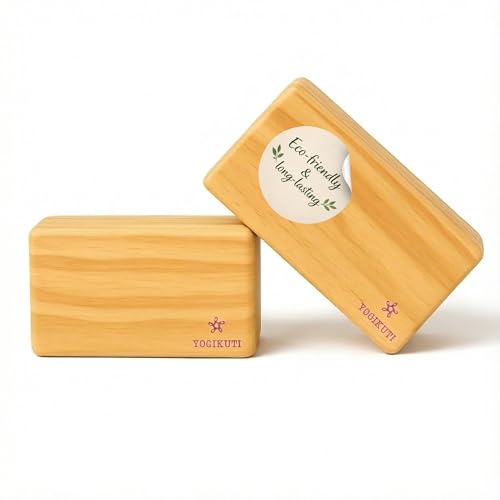
Solid Wooden Yoga Block Set of 2 | Premium Pine Wood Iyengar Yoga Blocks | Solid, Durable & Smooth Rounded Edges | Wooden Yoga Props for Stretching, Balance, Alignment & Home Studio Practice
This set suits practitioners who want the traditional look and firm feel of solid wood and who plan to use two blocks together, which is common in standing poses and seated forward folds. It is also a sensible choice for a home studio where the blocks stay in one place.
Key specs
- Sold as a set of two blocks
- Solid pine wood construction
- Smooth, rounded edges
- Designed in the Iyengar-style block format
Pros
- Solid wood feels firm and supportive under heavy weight.
- Rounded edges reduce discomfort on the hands and shins.
- Two blocks make it easy to build symmetrical support.
Cons
- Wood can feel hard for beginners who want extra cushioning.
- Smooth surfaces may slip on a non-mat floor unless used on a mat.
Hatha Yoga Cork Yoga Block | Natural Cork, Premium Brick 9″x6″x3″

Hatha Yoga Cork Yoga Block, Natural Cork from Portuguese, Premium Brick 9"x6"x3", Eco-Friendly Yoga Accessories for Yoga, Pilates & Stretching
Cork is a good match for practitioners who value grip, especially in balancing and standing poses where a block may shift. The 9-by-6-inch footprint and 3-inch height are close to the standard brick format, so this block works well for most floor-level and mid-height support.
Key specs
- Natural cork construction
- Dimensions: 9 x 6 x 3 inches
- Brick-style shape
Pros
- Cork offers a naturally grippy surface that resists slipping.
- Standard brick size fits most sequences and props plans.
- Cork is often described by owners as odor-resistant and easy to wipe clean.
Cons
- A 3-inch height may be low for practitioners who need extra lift.
- Cork can show surface marks over time with heavy use.
Toddmomy Solid Wood Yoga Block | High Density Wooden Brick

Toddmomy Solid Wood Yoga Block, High Density Wooden Brick with Round Edges & Non-Slip Surface, Yoga Prop for Restorative Fitness, Stretching, Pilates and Meditation, 9" x 4.4" x 2.8"
This block is aimed at restorative practice, stretching, and anyone who wants a compact prop that fits in a bag or small closet. Its smaller footprint makes it easy to slide under a hip or hold in a hand during a slow hold.
Key specs
- Solid wood with high-density construction
- Dimensions: 9 x 4.4 x 2.8 inches
- Round edges and non-slip surface
Pros
- High-density wood gives a stable, low-flex feel.
- Compact size is easy to store and transport.
- Round edges make it comfortable to hold for longer periods.
Cons
- The slimmer profile may not suit taller practitioners who need full support.
- Solid wood is heavier than foam or cork alternatives.
Cork Yoga Blocks 2 Pack Set | Natural Cork from Portugal, 9″x6″x4″
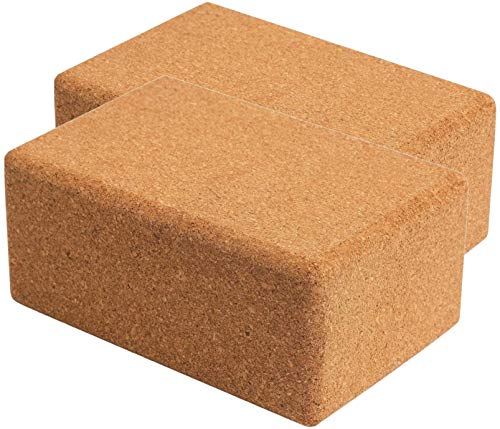
Cork Yoga Blocks 2 Pack Set -Natural Cork from Portugal, 9"x6"x4" Yoga Blocks Non-Slip&Anti-Tilt for Women| Men, Lightweight, Odor-Resistant| Moisture-Proof, Perfect Yoga Equipment
A two-pack in cork suits couples, studio sharers, or anyone who wants matched blocks for symmetrical poses. The 4-inch height gives more lift than the 3-inch options in this list, which helps with seated poses and standing postures where the floor is far from the hand.
Key specs
- Sold as a pair
- Natural cork from Portugal
- Dimensions: 9 x 6 x 4 inches
Pros
- The 4-inch height offers more support than standard low blocks.
- Cork is lightweight relative to solid wood.
- Two blocks allow balanced support on both sides.
Cons
- Cork can compress slightly under very heavy, sustained weight.
- Taller height may feel unstable for some beginners in balance poses.
Gaiam Yoga Block | Latex-Free EVA Foam

Gaiam Yoga Block – Supportive Latex-Free Eva Foam – Soft Non-Slip Surface with Beveled Edges for Yoga, Pilates, Meditation – Yoga Accessories for Stability, Balance, Deepen Stretches
Although this block is foam rather than wood, it is included because some buyers want a yoga block that is firm, familiar, and lower in cost than solid wood, and because the beveled edges and surface are designed for stability. It suits beginners and those who prefer a softer, more forgiving surface.
Key specs
- Latex-free EVA foam construction
- Beveled edges
- Soft, non-slip surface
Pros
- Latex-free foam is a good option for those with latex sensitivity.
- Soft surface is comfortable for hands and joints during longer holds.
- Beveled edges help the block sit steadily.
Cons
- Foam compresses over time and may not hold height under heavy loading.
- It lacks the natural feel and weight of solid wood.
Buying Guide
Selection Criteria
When comparing wooden blocks for yoga, the most useful questions are about material, dimensions, and surface. Material determines weight, firmness, and grip. Dimensions determine how much lift the block gives and whether it fits your sequence. The surface controls whether the block stays put when your weight shifts. Start with those three and the rest of the decision becomes easier.
Important Features
- Material: Solid pine and dense wood feel firm and stable. Cork offers grip and a lighter weight. Foam is softer and more forgiving.
- Height: Standard blocks are often around 3 to 4 inches tall. Taller blocks add lift for seated and standing poses.
- Edges: Rounded or beveled edges are more comfortable to hold and less likely to dig into skin or shins.
- Surface: A non-slip or cork surface reduces movement during balancing work.
Specs to Check
Before buying, check the listed dimensions, the number of blocks in the set, and the material description. Confirm that the stated height matches the support you need. If you plan to use a block under your sit bones or hips, a taller height may be more useful. If you need a prop for your hands in a balance pose, a lower, denser block is usually more stable.
Choosing by Need
- Beginners who want a firm, traditional feel: Consider solid pine blocks with rounded edges.
- Balance and standing work: Cork offers good grip and a stable base.
- Restorative and gentle stretching: A compact, high-density block is easy to position under the body.
- Sharing a practice or matching props: A two-pack gives you symmetrical support.
- Softer surface or latex sensitivity: Foam options can be more comfortable, though they compress over time.
Things to Watch Out For
Be cautious with very smooth wood surfaces on hard floors, since they can slide. Check whether a block is solid or hollow, because hollow blocks may crack under heavy use. If you have a joint condition, pain, or injury, consult a qualified healthcare provider or experienced yoga teacher before using props to support a pose. For general context on using props, see Yoga Props Buying Guide and Yoga Block Materials Compared.
FAQ
Are wooden yoga blocks better than foam?
Neither is better for everyone. Wood is firmer and more stable under heavy weight, while foam is softer and lighter. Many practitioners choose wood for structure and foam for comfort. For a deeper comparison, see Foam vs Cork Yoga Blocks (2026): Which Is Better for Your Practice?.
What size wooden block is standard?
A common brick-style block measures about 9 by 6 inches, with heights around 3 to 4 inches. Some sets offer a smaller or thicker profile, so check the listed dimensions before buying.
How many blocks do I need?
Many practitioners start with two. Two blocks let you build symmetrical support for standing poses and seated work, and they are useful when you want to raise both hands or both hips evenly.
Do wooden blocks slip on the floor?
Smooth wood can slide on hard floors. Using a mat, choosing a block with a non-slip or cork surface, or placing the block on a towel can reduce movement. For more on this, see Yoga Towels.
Can wooden blocks replace a yoga strap or bolster?
Blocks, straps, and bolsters serve different roles. Blocks provide firm lift, straps extend reach, and bolsters offer soft support for restorative poses. For a fuller picture, see Yoga Straps Explained and Yoga Bolsters.
How do I care for a wooden yoga block?
Wipe the block with a damp cloth and let it dry fully. Avoid soaking it or leaving it in direct sun for long periods, since moisture and heat can affect wood and cork. Manufacturers typically recommend gentle cleaning only.
Are yoga blocks safe for all practitioners?
Props can help many people, but they are not a substitute for professional guidance. If you have an injury, chronic pain, or a medical condition, consult a qualified healthcare provider or a certified yoga teacher before adding props to your practice.
Conclusion
For a traditional, firm feel and a paired setup, the solid pine set is a strong starting point. Buyers who prioritize grip and an eco-minded material may prefer the cork brick. The compact Toddmomy block suits restorative work and small storage, while the cork two-pack offers more lift and matched support. If you want a softer, latex-free surface, the Gaiam foam block is the option to consider. Match the block to your main use, check the dimensions, and you will have a prop that supports your practice for years.

About Declan Maddox
Declan puts together our yoga guides, digging through specifications, manufacturer details and owner reviews so you don't have to.


