By Declan Maddox
As an Amazon Associate I earn from qualifying purchases. This page may contain affiliate links.
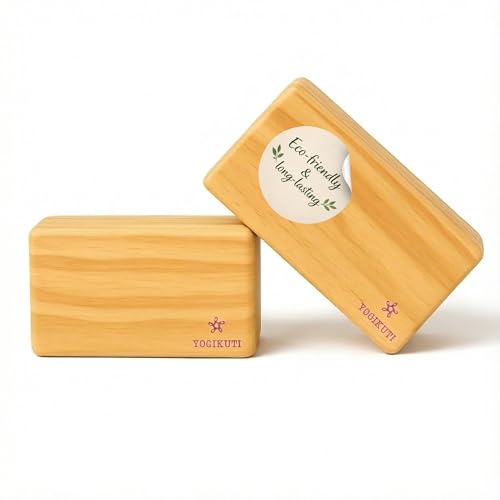
An alternative to yoga blocks is any sturdy, stable object that raises the floor toward your hands or body, such as a firm book stack, a sturdy chair, a folded blanket, or a bolster. Yoga blocks exist to shorten the distance between you and the floor so you can hold a pose with good alignment, so any substitute should be firm, non-slip, and stable under load.
Why You Might Need an Alternative to Yoga Blocks
Most people reach for a substitute for one of three reasons. They forgot their blocks on a trip, they are trying yoga for the first time and do not want to buy props yet, or they practice in a space where a standard block would be awkward to store. In each case, the goal is the same: give your body a supported point of contact so you can focus on breath and alignment rather than straining.
Blocks are useful in standing poses like Triangle (Trikonasana), seated poses like Seated Forward Fold, and restorative setups. A substitute can often do the same job, but only if it meets a few basic requirements.
Factors That Make a Substitute Work
Before you use anything in place of a block, check it against these criteria.
- Firmness. The object should not compress or wobble when you put weight on it. Soft cushions and loose pillows can roll out from under you.
- Height. Standard yoga blocks are often sold in a few sizes, and many practitioners use the height that brings the floor to a comfortable reach. A substitute should let you adjust height in small steps, which is easier with a stack of books than with a single chair.
- Surface grip. Smooth, glossy surfaces can slip on a mat. Rough or matte surfaces hold better.
- Stability. The base should be wide enough that the object will not tip when you shift your weight.
If an object fails any of these, it is not a good substitute, no matter how convenient it is.
Household Alternatives to Yoga Blocks
Several common items meet the basic requirements when used with care.
- A stack of hardcover books. Heavy, flat, and easy to adjust. Stack them with the spines aligned and the largest book on the bottom. Two or three hardcovers often approximate a standard block height. Choose books that are at least 1 to 2 inches thick each, and avoid paperbacks, which bend.
- A firm chair. Useful for seated and standing support. Place it against a wall for stability, and use a seat height that puts your hands at a comfortable reach. Avoid rolling chairs and chairs with wheels.
- A folded blanket. Good for seated poses and for raising the hips in Seated Forward Fold. Fold it into a firm rectangle, roughly 4 to 6 inches thick, rather than a loose bundle. Blankets are softer than blocks, so they compress over time and may need refolding during a session.
- A sturdy bolster or firm pillow. Better for restorative poses than for standing work. A bolster gives a wider, rounder surface that works well under the torso or hips.
- A thick, firm towel. A rolled or folded towel can add a few inches of height and works well for hands or forearms in seated poses. Yoga-specific towels are made for this kind of use.
Practical Steps for Using a Substitute Safely
- Test the object by placing your full weight on it before you commit. Press down gently, then shift slightly. If it moves, change it.
- Set it on a flat, non-slip surface. Carpet or a yoga mat works better than hardwood alone.
- Build height gradually. Start lower than you think you need, then add a layer or a fold until your hands or body rest without strain.
- Recheck the setup between poses. Books shift, and blankets flatten during a practice.
- Stop if you feel pinching, dizziness, or sharp pain. Support should feel steady, not precarious.
If you have an injury, a joint condition, or a history of falls, check with a physical therapist or a qualified yoga teacher before relying on improvised props, since unstable support can increase the risk of strain or injury.
When a Substitute Is Not Enough
Some poses depend on the exact dimensions and grip of a purpose-made block. Inversions, balancing poses that rely on a block for a tight edge, and deep forward folds that need precise height can be harder to set up safely with household items. In those cases, a standard block or a different support is a better choice than improvising. For a closer look at materials and sizing, see Yoga Block Materials Compared and Foam vs Cork Yoga Blocks (2026): Which Is Better for Your Practice?.
If you practice in a small room and want to keep props minimal, Yoga in Small Spaces offers layout ideas that work well with improvised support.
What We’d Use
If you want a purpose-built option that behaves like a block without the guesswork, these are the most common types to look for.
- A standard foam yoga block that is lightweight, firm, and easy to wipe clean. View on Amazon
- A cork yoga block, which offers more grip and a firmer feel for balance work. View on Amazon
- A thick folding yoga bolster for restorative support and seated poses. View on Amazon
Related Questions
Can I use a pillow instead of a yoga block?
Only a firm pillow, and only for seated or restorative poses. Soft pillows compress too much to hold a standing pose safely.
How tall should a substitute be?
Set it so your hands or body rest comfortably without rounding your back or locking your joints. Adjust in small steps rather than guessing once.
Are books a safe substitute for yoga blocks?
They can be, if the stack is stable and the books are thick and flat. Check the stack before each pose, since books can shift.
Do I need blocks as a beginner?
Many beginners benefit from them, but not everyone needs them right away. For a broader view of starter props, see Yoga Props Buying Guide.
Can I use a chair for every pose?
A chair works well for many seated and standing poses, but it is not a substitute for every block use. Some poses need a lower, more compact surface.
Related reading

About Declan Maddox
Declan puts together our yoga guides, digging through specifications, manufacturer details and owner reviews so you don't have to.