By Claire Whitaker
Updated November 2026
If you don’t have yoga blocks, you can still support your practice with household items. Sturdy books, a firm pillow, a folded blanket, or a stack of cushions can raise the floor to your hands or hips in most standing and seated poses. The key is that the substitute stays stable, does not slide, and is firm enough to hold your weight without collapsing.
Why blocks matter in most poses
Blocks shorten the distance between your body and the floor. That lets you keep your spine long in forward folds, reach the ground in triangle pose without rounding your back, and sit with your hips higher than your knees in seated poses. Without support, many students compensate by hunching, locking their knees, or forcing a stretch that pulls on the lower back or hamstrings.
Shopping for one? See our guide: Foam vs Cork Yoga Blocks (2026): Which Is Better for Your Practice?.
The support does not need to be a block. What it needs is a fixed height and a flat, stable surface. Once you know that, most of what a block does can be replaced at home.
Household substitutes and how to use them
Check each option for three things: firmness, stability, and a surface your hand or hip can rest on without sinking.
- Hardcover books. A stack of two or three thick, hardcover books is the closest match to a standard block. Place them spine-down so the pages do not bend. Check that the stack does not wobble before you lean on it.
- A firm pillow or two stacked. Works well for seated poses and hip support. Avoid soft, memory-foam pillows, which compress under weight and shift your alignment.
- A folded blanket. Fold it into a firm rectangle, several layers thick. Good for kneeling support and for raising the hips in seated forward folds.
- A sturdy stool or low step. Useful for standing poses where you need your hand to reach further down. Only use it if it is stable and cannot tip.
- A rolled towel. Roll it tightly and secure the roll so it does not unravel. It works for light support under the sit bones or the hands in low poses.
- A firm cushion or sofa cushion. Choose one with a firm core. It is most useful in seated meditation and for lifting the hips.
Safety and what to watch for
Substitutes lack the uniform height and grip that a purpose-made block provides, so pay attention to how they feel under load. Stop if a book slides, a pillow flattens, or a stool moves. Work on a non-slip surface such as a yoga mat or a rug with a rubber backing, and keep your movements slow.
If you have an existing injury, such as wrist, knee, or lower back pain, or you are unsure whether a pose is safe for you, speak with a physical therapist or a qualified yoga instructor before adapting your practice. Substitutes are a practical stopgap, not a replacement for professional guidance.
Practical steps to set up your props
- Choose the height you need. Test the stack by pressing down on it with your hand before you commit your full weight.
- Place the support on a flat, non-slip surface, ideally on your mat.
- Build the height in small increments. Start with one layer and add more only if you still cannot reach comfortably.
- Check alignment in a mirror or with a friend. Your spine should stay long and your knees should stay soft.
- Keep the substitute in the same place for each session so you can build consistent muscle memory.
What we’d use
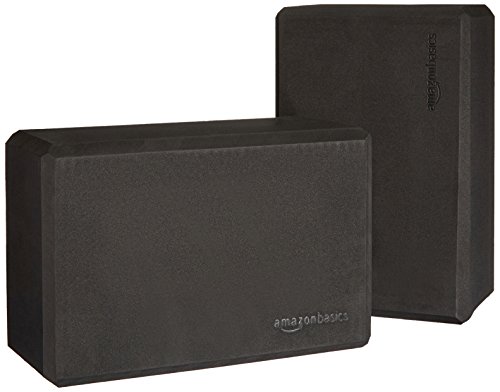
If you practice often, a purpose-built foam block is worth considering because it stays the same height and will not slide. Look for a dense foam option, such as a View on Amazon, which holds its shape under repeated use.
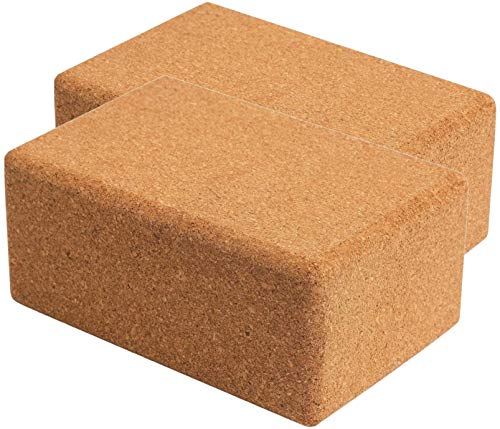
For a lighter, more travel-friendly option, a cork block like the View on Amazon offers a firm surface with a natural grip.
For more on how blocks fit into a full setup, see Yoga Blocks Explained and Yoga Block Materials Compared. If you want specific poses to try with household supports, Yoga Poses with Blocks: 6 Steps to Better Alignment and Support walks through several options step by step.
FAQ
Can I use a water bottle instead of a yoga block?
A full, sealed water bottle is not reliable. It can roll or deform under weight. Use a block-height stack of books or a folded blanket instead.
Are books safe to use as a yoga block?
Hardcover books are generally safe when stacked on a flat, non-slip surface and tested before you lean on them. Stop if the stack shifts.
When should I buy an actual yoga block?
Consider buying one if you practice several times a week, need consistent height, or find that household substitutes slide or compress. A block gives you a dependable surface for longer sessions.
Related reading
- Yoga Postures with Blocks: 6 Step-by-Step Poses for Better Alignment
- Yoga Mat and Blocks Set: How to Choose and Use One for Home Practice
Ready to choose one?
About Claire Whitaker
Claire Whitaker is part of our editorial team and reviews and edits our yoga guides, checking product details against manufacturer specifications and owner feedback.