By Claire Whitaker
Updated November 2026
Standard yoga mat dimensions are about 68 inches long, 24 inches wide and 1/8 inch (3 to 4 mm) thick. Most mats on the market fall close to those numbers, which makes them a reliable starting point. In this guide, you will learn how to check whether that size fits your body, how to adjust for height and practice style, and how to avoid the sizing mistakes that leave people cramped or wobbling in standing poses.
What Counts as a Standard Yoga Mat Size
Yoga mats are not regulated by a single industry standard, so manufacturers set their own sizes. Still, a clear pattern has emerged over time. Most brands sell a “standard” or “regular” mat in the following range:
Shopping for one? See our guide: Liforme Yoga Mat Sale: Is It Worth It? Review (2026).
- Length: 68 to 72 inches (173 to 183 cm)
- Width: 24 inches (61 cm), with some mats at 26 inches
- Thickness: 1/16 inch (1.5 mm) to 1/4 inch (6 mm), with 1/8 inch (3 to 4 mm) the most common
Mats labeled “extra long” usually run 74 to 85 inches, and “extra wide” versions often measure 26 to 36 inches across. Because these labels are marketing terms rather than measured standards, always check the product listing for the exact dimensions before buying.
Step 1: Measure Your Height to Check Length
Length matters most for poses where your head or feet would otherwise run off the edge. A mat that is too short forces you to rest your head on the floor in savasana, or to place your feet on the wall in downward dog.
How to Measure
- Lie flat on the floor on your back with your heels together.
- Have someone mark the point at the top of your head and the point at your heels, or use a tape measure along the floor.
- Add 6 to 8 inches to that number for comfort in standing and extended poses.
A person who is 5 feet 6 inches (66 inches) tall will generally be comfortable on a 68-inch mat, though a 72-inch mat gives more room for forward folds. Taller practitioners, especially those over 6 feet (72 inches), should look for a 72-inch or longer option.
Step 2: Choose Width Based on Your Body and Poses
The standard 24-inch width works well for most adults doing flow-based practices. Width becomes more important if you:
- Move through wide-legged poses such as Warrior II or Side Plank with the arm extended.
- Have broad shoulders or hips and feel your elbows or knees touching the edge.
- Practice with a partner or want space to roll and stretch.
- Do Pilates-style work, where a wider surface helps with sit-ups and rolling exercises.
In that case, a 26-inch or 28-inch mat gives noticeably more space. Anything above 30 inches is usually reserved for specialty use, such as group classes or extra-wide Pilates work, and it can be heavier to carry.
Step 3: Pick Thickness for Your Joints and Balance
Thickness changes how the mat feels under your knees, wrists and spine, and how stable you are in balance poses. The trade-off is simple: thicker mats cushion more, but they also make balance harder.
| Thickness | Best for | Trade-off |
|---|---|---|
| 1/16 inch (1.5 mm) | Experienced practitioners, travel, hot yoga | Less cushioning, thinner feel on hard floors |
| 1/8 inch (3 to 4 mm) | Most general practice | Balanced grip and cushioning |
| 1/4 inch (6 mm) | Restorative, knee-sensitive practice, floor-based work | Less stable in standing balance poses |
If you practice mostly standing sequences, a 1/8-inch mat is a safe default. If you spend a lot of time kneeling or lying on the floor, a thicker mat is worth considering. For more on this, see Yoga Mat Thickness Guide.
Step 4: Consider Your Practice Style
Different styles put different demands on a mat, so match your choice to how you actually practice.
- Vinyasa and power yoga: A standard 68-inch by 24-inch mat with a 1/16 to 1/8-inch thickness suits most people. Good grip matters more than extra size.
- Yin and restorative: Thicker mats help. Many people also add a bolster or blanket, so a slightly longer mat gives more room. See Yoga Mat for Yin Yoga: 4 Best Picks for Slow, Floor-Based Practice and Yoga Mat for Restorative Yoga: 6 Factors and Steps to Choose and Use One.
- Pilates: Width and firmness matter more here. See Yoga Mat for Pilates: How to Choose the Right One in 6 Steps.
- Hot yoga: A thinner, grippy mat helps with sweat. Many studios use towels on top, which reduces the need for extra thickness.
Step 5: Check the Mat Against Your Space and Storage
Standard dimensions also affect how you store and carry the mat. A 68-inch mat rolls to a tube about 3 feet long, which fits most closets and car trunks. A 72-inch extra-long mat or a 28-inch-wide mat takes up more room. If you travel often, a compact or foldable design may be more practical. See Yoga Mat Travel Foldable: 6 Factors and Steps to Pick the Right One and Yoga Mat Carrying Bag: How to Choose and Use One Well (2026).
Checklist Before You Buy
- Measure your height and add 6 to 8 inches for length.
- Check whether your shoulders or hips need more than 24 inches of width.
- Choose thickness based on how much time you spend kneeling or on the floor.
- Confirm the exact dimensions in the product listing, not just the marketing label.
- Measure your storage space or carrying bag before ordering.
Common Mistakes
- Buying by label alone. “Standard” and “regular” are not consistent across brands. Always check the listed length and width.
- Ignoring height. A short mat becomes frustrating quickly in savasana and inversions.
- Choosing the thickest mat by default. Extra cushioning can reduce stability in standing poses.
- Forgetting about weight. Wider and longer mats are heavier, which matters if you carry the mat to class.
- Skipping the grip test. Size does not replace traction. Look for a surface that stays put when you move. For more, see Non Slip Yoga Mat: How to Choose Grip That Holds Up in Practice (2026).
Tips for Getting the Most From Your Mat
- Place the mat on a flat, clean surface. Carpet can cause sliding, so see Yoga Mat for Carpet: How to Choose and Use One on Carpeted Floors (2026).
- If you are between two sizes, choose the longer mat. You can always fold a blanket under your heels or head.
- Use a towel or mat topper if you need more cushion without replacing the mat.
- Revisit your size choice every year or two. Changes in practice or body type can change what feels comfortable.
Recommended gear
A few accessories make standard-size mats more useful, especially if you practice at home or move between spaces.
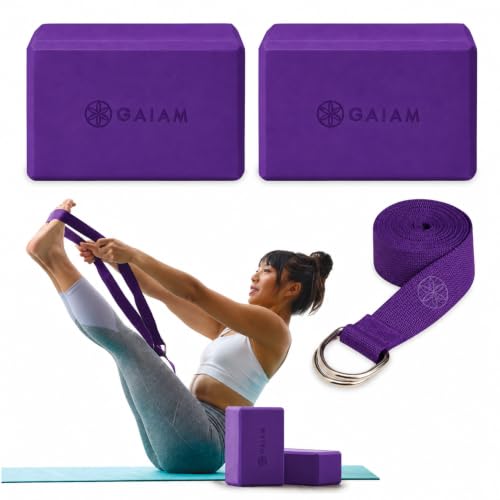
- Yoga blocks: Blocks extend your reach in standing poses and support you in seated work, which helps when a mat feels short. View on Amazon
- Yoga strap: A strap lets you reach your feet in seated forward folds and makes carrying the mat easier. View on Amazon
- Yoga mat carrying bag: A bag protects the mat and keeps it clean during travel, especially at standard length. View on Amazon
FAQ
What is the most common yoga mat size?
The most common size is about 68 inches long, 24 inches wide and 1/8 inch thick. Many brands use this as their default.
Is a 68-inch mat long enough for tall people?
For most people up to about 5 feet 10 inches, yes. Taller practitioners usually prefer a 72-inch or longer mat so their head and feet stay on the mat during savasana and standing poses.
Are yoga mats wider than 24 inches worth it?
They can be. A 26-inch or 28-inch mat gives more room for wide poses and rolling, and it is often better for Pilates. The tradeoff is extra weight and bulk.
What thickness is best for knees?
Many people find 1/4 inch (6 mm) comfortable for knee-heavy practice. Thicker mats reduce pressure, but they can make balance poses less stable.
Do all brands use the same dimensions?
No. Yoga mat sizes are not standardized across the industry, so check each product’s listed length, width and thickness before buying.
Can I use a standard mat for hot yoga?
Yes, though many practitioners choose a thinner, grippy mat and use a towel on top for sweat control. Size matters less than traction in hot classes.
Should I measure my height or my reach?
Measure your height first, then add 6 to 8 inches. That gives you enough room for both lying and standing poses without the mat feeling oversized.
Conclusion
Standard yoga mat dimensions give you a dependable starting point: roughly 68 by 24 inches at 1/8 inch thick. Adjust length for your height, width for your shoulders and hips, and thickness for your joints and balance. Check the listed dimensions carefully, since sizing varies between brands. If you are unsure, a 72-inch by 24-inch mat at 1/8 inch offers a practical middle ground for most practitioners.
Ready to choose one?
About Claire Whitaker
Claire Whitaker is part of our editorial team and reviews and edits our yoga guides, checking product details against manufacturer specifications and owner feedback.