By Declan Maddox
As an Amazon Associate I earn from qualifying purchases. This page may contain affiliate links.
Hot yoga during pregnancy is one of the most common questions expecting students ask their instructors, and the honest answer is that it depends on your health, your trimester and your provider’s guidance. Most major obstetric groups advise against deliberately overheating the body while pregnant, because elevated core temperature is a concern in early pregnancy, and because heat, dehydration and dizziness can make a practice unsafe. Still, many people want to keep moving in a warm room, so this guide focuses on gear that helps you stay cool, hydrated, supported and steady if you do attend a heated class with your doctor’s approval. It is not a recommendation to practice in heat, and it is not a substitute for medical advice.
The picks below were selected by reviewing manufacturer specifications, brand reputation for materials and construction, and patterns that owners commonly describe in reviews, such as grip performance, breathability and cushioning. We did not test these products ourselves, and no product here is a medical device. Use this list as a starting point for conversations with your midwife or physician.
Our Top Picks
Quick Comparison
| Product | Best for | Key feature |
|---|---|---|
| Manduka PRO Yoga Mat | Students who want a dense, supportive base | Thick, closed-cell surface with strong grip |
| Jade Harmony Yoga Mat | Eco-minded students who sweat heavily | Natural rubber base with a grippy texture |
| Gaiam Essentials Thick Yoga Mat | Budget-conscious students needing extra cushion | Extra thickness for joint comfort |
| Lululemon The Mat 5mm | Students who prefer a lighter, portable mat | Lightweight build with a non-slip top |
| Yoga Design Lab Combo Yoga Towel | Sweaty students who need a towel-and-mat combo | Microfiber towel that grips the mat surface |
| Yoga Hand Towel by Manduka | Students who want a compact towel for hands and face | Absorbent, quick-drying fabric |
| Gaiam Yoga Block (Foam) | Students who need stable support in standing poses | Lightweight foam block with a firm edge |
| Manduka Cork Yoga Block | Students who want a firm, non-slip support | Cork surface with a sturdy, non-slip texture |
Manduka PRO Yoga Mat
This is a dense, long-lasting mat suited to students who practice often and want consistent cushioning and a stable base during balance-focused work. Its thickness helps protect knees and wrists during floor sequences that you may need to modify as pregnancy progresses.
Key specs
- Manufacturer-specified thickness of 6 mm
- Closed-cell surface designed to resist moisture absorption
- Length commonly listed around 71 inches
Pros
- Dense cushioning for knees and wrists
- Durable, long-lasting construction
- Consistent grip across many practice sessions
Cons
- Heavier than travel mats, which matters for commuting to class
- Can feel firm for students who want very plush padding
Jade Harmony Yoga Mat
This mat suits students who prefer natural materials and want reliable traction when their palms and feet are damp. It is a common choice for people who want a mat that stays put during standing poses, which can help you feel more secure as your center of gravity shifts.
Key specs
- Natural rubber base
- Manufacturer-specified thickness of 3/16 inch (about 4.8 mm)
- Textured surface designed for grip
Pros
- Natural rubber base with strong traction
- Eco-conscious material choice
- Stable footing in standing sequences
Cons
- Natural rubber can have a noticeable scent at first
- Heavier than many lightweight alternatives
Gaiam Essentials Thick Yoga Mat
This is a practical pick for students who want extra cushion without spending heavily on a specialty mat. The added thickness can be useful for reclined and kneeling work, where pressure on the hips and knees often increases during pregnancy.
Key specs
- Manufacturer-specified thickness of 10 mm
- Non-slip textured surface
- Lightweight relative to its thickness
Pros
- Generous cushioning for hips and knees
- Budget-friendly option within the budget tier
- Easy to store and carry
Cons
- Very thick mats can feel wobbly in balance poses
- Surface may need a few weeks to break in for some owners
Lululemon The Mat 5mm
This mat is aimed at students who want a lighter, more portable option for getting to and from class. Its thinner profile offers a firmer surface, which some pregnant students find more stable for standing and balance work.
Key specs
- Manufacturer-specified thickness of 5 mm
- Textured top surface for grip
- Designed for lightweight carrying
Pros
- Lightweight and easy to carry
- Firm surface suited to balance work
- Well-regarded surface texture in owner feedback
Cons
- Less cushioning than thicker mats for knees and hips
- Premium pricing tier
Yoga Design Lab Combo Yoga Towel
This towel is designed to lay over your mat so you have traction when you sweat. It is a helpful choice for students who find their palms and feet slipping in warm rooms, and it can reduce the need to grip tightly during standing poses.
Key specs
- Microfiber construction
- Textured bottom designed to grip the mat
- Full-length format intended to cover a standard mat
Pros
- Adds grip when sweating heavily
- Absorbent microfiber fabric
- Machine washable per typical care guidance
Cons
- Can bunch on very slick floors if not placed carefully
- Needs regular washing to keep grip performing well
Yoga Hand Towel by Manduka
This compact towel is meant for hands, face and small areas rather than full-mat coverage. It is useful for wiping sweat during a heated class and keeping your grip dry, especially in poses where your hands carry weight.
Key specs
- Compact hand-towel size
- Absorbent fabric construction
- Quick-drying design
Pros
- Easy to keep in a bag or hold during practice
- Quick-drying for multiple classes
- Useful for face and neck wiping
Cons
- Not large enough to cover a full mat
- Can saturate quickly during intense heat
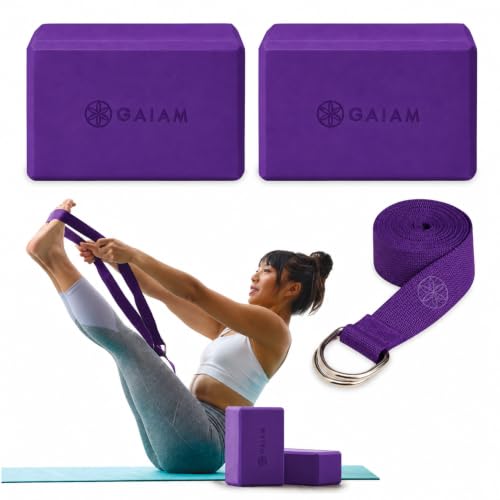
Gaiam Yoga Block (Foam)
A foam block offers stable, lightweight support for standing and seated work. It can help you bring the floor closer to your hands, which often makes balance and posture easier to manage as your body changes.
Key specs
- Lightweight foam construction
- Standard block dimensions for most sequences
- Textured surface for hand grip
Pros
- Lightweight and easy to handle
- Good support for standing poses
- Affordable within the budget tier
Cons
- Foam can compress over time under heavy load
- Less firm than cork or wood options
Manduka Cork Yoga Block
A cork block is a firm, stable option for students who want reliable support and a surface that resists slipping. It works well for supported standing postures and for reaching the floor when balance feels less certain.
Key specs
- Cork surface with natural texture
- Firm, dense construction
- Standard block dimensions
Pros
- Firm, stable support
- Non-slip surface when damp
- Durable construction
Cons
- Heavier than foam blocks
- Premium pricing tier
Buying Guide
Selection criteria
When choosing gear for a heated class during pregnancy, prioritize grip, breathability, stability and support. Heat tends to increase sweat, and sweat reduces traction, so the most useful items are often the ones that keep you from slipping. Think about how each item supports the poses you actually plan to practice, not just the ones you see in advanced demonstrations.
Important features to consider
- Surface grip: Look for textured or closed-cell surfaces that stay grippy when damp.
- Thickness: Mats between 4 mm and 6 mm provide a balance of stability and cushion for many students, while thicker mats add comfort but can feel less steady in balance poses.
- Material: Natural rubber and cork tend to offer strong traction; microfiber towels add grip over a mat.
- Weight and portability: Heavier mats are more stable on the floor but harder to carry to class.
Specs to check before buying
- Manufacturer-stated thickness, length and width
- Base material (PVC, natural rubber, TPE or other)
- Care instructions, especially for towels and mats that must be washed regularly
- Block dimensions and material density
Choosing by need
If you want maximum stability in standing poses, a 4 mm to 5 mm mat paired with a firm cork or wood block is a sensible combination. If you need more cushion for knees, hips or wrists, a thicker mat with a towel for grip may suit you better. If you sweat heavily, prioritize a towel that lies over your mat and a compact hand towel for your face and palms.
Things to watch out for
- Avoid overheated rooms. Most guidance recommends staying well hydrated and leaving the room if you feel dizzy, nauseated or short of breath.
- Be cautious with deep twists, inversions and breath-holding, which many prenatal teachers advise against.
- Gear cannot replace medical clearance. Speak with your provider before attending any heated class.
For more on modifying poses safely, see Yoga Pose Modifications and Understanding Your Limits in Yoga. If you are new to props, Yoga Props Buying Guide explains how each item is typically used.
FAQ
Can you do hot yoga during pregnancy?
Some people do attend heated classes during pregnancy, but many health organizations advise against deliberately raising your core temperature, particularly in early pregnancy. If you want to practice in a warm room, ask your doctor or midwife first and choose a moderate temperature with plenty of breaks and water.
What are the main risks of hot yoga during pregnancy?
The main concerns are overheating, dehydration, dizziness, fainting and fatigue. Elevated body temperature is the factor most often discussed by medical professionals, so cooler rooms and frequent hydration are commonly recommended if you do attend a class.
What should I do if I feel unwell during class?
Stop the practice immediately, sit or lie down on your side, and move to a cooler area. Drink water and contact your healthcare provider if symptoms persist, or seek urgent care for chest pain, severe headache, bleeding or fainting.
Which poses should pregnant students avoid?
Many prenatal teachers advise avoiding deep abdominal twists, strong backbends, inversions, lying flat on the back after the first trimester, and breath-retention practices. Modifications such as using a block or bolster can make a practice more comfortable.
Do I need a special mat for prenatal practice?
No special mat is required, but a grippy surface and adequate cushioning are useful. Students often find a mat between 4 mm and 6 mm, combined with a towel for grip, a reasonable starting point.
How much water should I drink before and after class?
Hydration needs vary, and your provider can give personalized guidance. A common approach is to drink water consistently throughout the day and to sip regularly during class rather than waiting until you feel thirsty.
Are there gentler alternatives to heated classes?
Yes. Many students prefer a room-temperature prenatal class focused on alignment, breath and gentle strength. For a broader look at styles, see What Are the Different Types of Yoga? 8 Major Styles Explained and Yin Yoga.
Conclusion
Hot yoga during pregnancy is a decision to make with your healthcare provider, not a default choice. If you receive clearance and attend a heated class, the right gear can make practice safer and more comfortable. A grippy mat such as the Manduka PRO Yoga Mat or Jade Harmony Yoga Mat suits students who want stable footing, while the Gaiam Essentials Thick Yoga Mat favors extra cushion. Pair any mat with the Yoga Design Lab Combo Yoga Towel or the Yoga Hand Towel by Manduka for sweat control, and add a foam or cork block for support. Whatever you choose, prioritize hydration, cooler rooms and your own body’s signals over the intensity of the class.

About Declan Maddox
Declan puts together our yoga guides, digging through specifications, manufacturer details and owner reviews so you don't have to.