By Claire Whitaker
Updated November 2026
Yoga blocks and straps UK shoppers buy are simple tools, but they make a real difference to alignment, comfort and how long you can hold a pose. This guide explains what to look for when choosing them, how to set them up, and how to use them safely at home. By the end, you will know which size and material suit your body and practice, and how to use each tool with confidence.
Step 1: Choose the Right Block Material and Size
Most blocks sold in the UK are made from cork, foam, or dense EVA foam. Cork is firm and stable, which suits standing poses and balance work. Foam is lighter and softer, which many people prefer for seated poses or restorative practice. Blocks are commonly sold in a standard size around 23 cm long, 15 cm wide and 10 cm high, though sizes vary by brand, so check the listed dimensions before you buy.
Shopping for one? See our guide: 5 Best Yoga Strap and Blocks Sets for Home Practice (2026).
Look for a block that feels stable on your mat and does not slide when you press into it. If you are shorter, a slightly lower block may be easier to reach. Taller practitioners often find that two blocks stacked, or a single block on its tallest side, give enough height.
Step 2: Pick a Strap That Fits Your Practice
Yoga straps are usually cotton or cotton blend, often with a metal or plastic D-ring buckle. Length matters more than width. A strap around 2 to 2.5 metres long is a common choice for general use, and it gives enough reach for most seated and reclining poses. Some UK retailers also sell longer straps for people who want to extend the reach further.
A flat, slightly grippy cotton strap is easier to hold than a very smooth one. Check that the buckle sits flat and holds firmly when you pull, since a slipping buckle is one of the more common frustrations with cheap straps.
Step 3: Set Up Your Space
Place your mat on a non-slip surface, ideally hard flooring or a rug with a firm base. Keep blocks and straps within arm’s reach so you are not moving around mid-pose. For a standing pose such as Triangle Pose, set one block at the lowest height, close to the front leg, so your hand reaches it without rounding your back.
- Clear a space about 2 metres by 1 metre for a full sequence.
- Keep a wall nearby for balance support in standing poses.
- Have a folded blanket on hand for padding under your knees or hips.
Step 4: Use Blocks and Straps in Everyday Poses
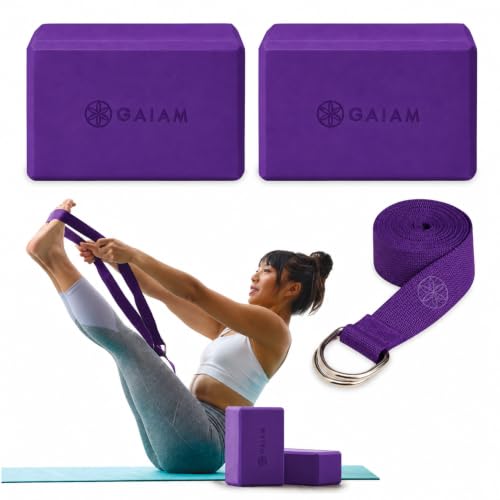
Start with simple uses. In Seated Forward Fold, sit on a folded blanket or a block to tilt the pelvis forward, which reduces strain on the lower back. In Bridge Pose, a block placed under the sacrum offers a supported lift. Use a strap around the feet in Supine Hamstring Stretch to extend the leg without rounding the spine.
The aim is comfort and alignment, not depth. If a prop makes a pose feel forced, lower the height or reduce the reach. For more specific ideas, see Yoga Poses with Blocks: 6 Steps to Better Alignment and Support and Yoga Strap Stretches for Beginners: 5 Safe Steps to Start.
Common Mistakes to Avoid
- Choosing a block that is too high, which can pull the body out of alignment.
- Pulling too hard on a strap and forcing a stretch past a comfortable range.
- Placing blocks on a slippery floor, which increases the risk of slipping.
- Using props to push into pain. Mild stretch is normal, but sharp or lasting pain is a signal to stop.
- Skipping a warm-up before using straps for deeper stretches.
Recommended Gear
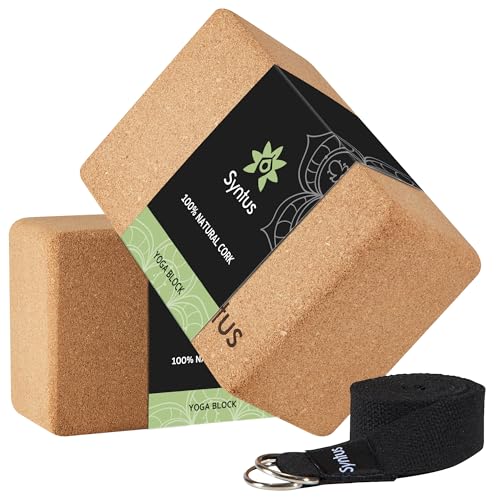
A sturdy cork block gives reliable support for standing poses and balance work. View on Amazon
A lightweight foam block is easier to carry and suits seated and restorative practice. View on Amazon
A cotton D-ring strap with a secure buckle makes it easier to hold stretches without strain. View on Amazon
FAQ
Are yoga blocks and straps worth buying for beginners?
Yes. Blocks help bring the floor closer to the body, and straps extend reach, so both make early poses easier to hold with good form. A basic set is usually enough to start.
Which is better for home practice, cork or foam blocks?
Cork offers firmer support for standing poses, while foam is softer and lighter for seated and restorative work. Many people choose a mix of both over time.
Can straps help with flexibility without causing injury?
Straps can support gentle stretching when used with control. If you have an existing injury or a medical condition, speak to a qualified physiotherapist or GP before starting a new stretching routine.
Conclusion
Choosing the right yoga blocks and straps for UK home practice comes down to material, size and strap length. Set up your space, start with simple poses, and let the props support your alignment rather than push you deeper. With a few minutes of practice each day, they become a useful part of your routine.
Related reading
- Yoga Blocks and Straps Wholesale: How to Source Them for Studios (2026)
- Yoga Blocks and Straps Decathlon: A Buyer's Guide for Home Practice
- 6 Best Gaiam Yoga Blocks and Strap Sets for Home Practice (2026)
- 5 Best Yoga Blocks and Strap Sets for Home Practice (2026)
Ready to choose one?
About Claire Whitaker
Claire Whitaker is part of our editorial team and reviews and edits our yoga guides, checking product details against manufacturer specifications and owner feedback.