By Declan Maddox
As an Amazon Associate we earn from qualifying purchases. This page may contain affiliate links.
If you practice yoga for stress relief, the right props often matter as much as the poses. This list is for people who want to slow down, settle the nervous system, and hold restful positions for several minutes without strain. The key buying factor is support: a prop should keep your body comfortable and stable so you can stop bracing and let go. Each pick below is matched to a specific use, with the trade-offs spelled out so you can choose what fits your space and practice.
Quick picks
| Pick | Best for | Key feature |
|---|---|---|
| Restorative Yoga Bolster | Long, supported holds in forward folds and reclined poses | Firm, dense fill that keeps its shape under the body |
| Weighted Yoga Eye Pillow | Savasana and breathing practices with eyes closed | Light, even weight across the eyes and forehead |
| Cotton or Flannel Yoga Blanket | Cool rooms, longer rest, and warmth during meditation | Soft, folds small enough to store in a drawer |
| Cork Yoga Block Set | Bringing the floor closer for seated and standing support | Dense, stable surface that resists slipping |
| Cushioned Yoga Mat (5–6 mm) | Daily practice on hard floors and for knee comfort | Extra thickness with a non-slip surface |
How we chose
These picks were selected by comparing manufacturer specifications, the reputation of established yoga equipment brands, and patterns in the feedback owners often report publicly. We did not test these products ourselves, and nothing here is based on lab results. Instead, we looked at four things:
- Stated specifications. Dimensions, fill type, weight, thickness, and materials as listed by manufacturers. A bolster’s fill and a mat’s thickness change how a prop performs, so we treated these numbers as the starting point.
- Brand reputation. Companies with a long record in yoga equipment, clear product labeling, and consistent sizing were favored over unfamiliar sellers with little information.
- Owner feedback patterns. We looked for recurring themes rather than single reviews. For example, owners often report that thin mats lose cushion quickly on hard floors, and that soft bolsters flatten under heavier bodies.
- Fit for stress-focused practice. Each pick had to support calm, low-effort positions. Props built mainly for strength or fast flows were left out.
Use the picks as a shortlist. Check the current specifications on the product page before you buy, since sizes and materials can change between versions.
Five props for yoga for stress relief
Restorative Yoga Bolster
Who it’s for: People who want to rest in supported forward folds, reclined twists, or legs-up-the-wall variations, and who find the floor too firm for long holds. It suits anyone who has been advised to avoid strain and wants a stable base for relaxation.
Pros
- Lifts the torso or hips so the body can soften without effort, which makes it easier to stay in a pose for five minutes or more.
- Dense fill generally holds its shape, so the support is consistent from one session to the next.
- Works for a wide range of poses, from supported child’s pose to a reclined bound angle.
Cons
- Bulkier than most props, so it needs dedicated storage space.
- Owners often report that very firm bolsters can feel too high for shorter people, so the fit depends on body size and the pose.
A bolster pairs well with the ideas in Restorative Yoga, where longer holds and passive support are the main focus. For a deeper comparison of shapes and fills, see Yoga Bolsters.
Check price on AmazonWeighted Yoga Eye Pillow
Who it’s for: Anyone who finds it hard to switch off during savasana or breathing practices. A lightly weighted eye pillow can make the closing minutes of a session feel more contained and less busy.
Pros
- Blocks light, which many people find helpful for closing the eyes and reducing visual distraction.
- Small and portable, so it fits in a bag for classes or travel.
- Filled pillows are often made with removable covers, which makes them easier to keep clean.
Cons
- Weight and fill vary widely. Some owners report that heavier pillows feel uncomfortable on the face, so start with a moderate weight.
- Scented fills such as lavender can be too strong for some people, and anyone with sensitivities should check the ingredient list first.
If you practice a gentle, slow sequence in the evening, the structure in Ten-Minute Yoga Routine can be a useful way to end the session with rest.
Check price on AmazonCotton or Flannel Yoga Blanket
Who it’s for: Practitioners who get cold during rest, people practicing in air-conditioned rooms, and anyone who wants a sense of enclosure during savasana or meditation.
Pros
- Adds warmth quickly, which helps the body relax during long, still poses.
- Can be folded into a small rectangle to support the spine, hips, or neck in restorative positions.
- Generally machine washable, which matters for a prop that touches the floor and skin.
Cons
- Thick flannel can be heavy to carry and takes longer to dry than thinner cotton.
- Cotton options may stretch or lose loft over time, especially if they are dried at high heat.
Blankets are also useful for supporting the body in restorative postures. For more ideas on folding and placement, read Yoga Blankets.
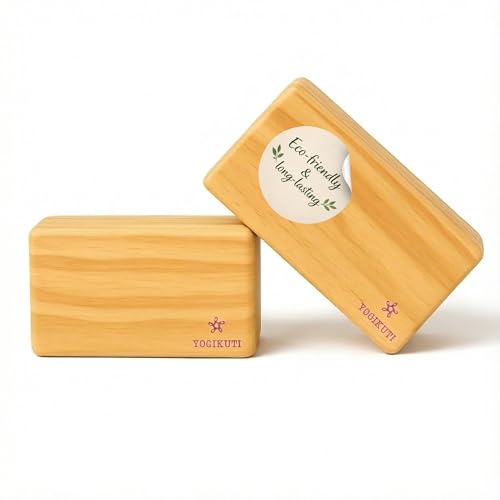
Check price on AmazonCork Yoga Block Set
Who it’s for: People who cannot reach the floor comfortably in seated forward folds or who want to bring the ground closer in standing poses. Blocks are also useful for keeping the hands supported when the wrists or shoulders feel tired.
Pros
- Cork surfaces tend to grip the floor and the skin better than smooth foam, which reduces slipping.
- Dense material holds its shape under body weight, so the height stays consistent.
- Manufacturers commonly list standard dimensions, which makes it easier to plan a setup for specific poses.
Cons
- Heavier than foam or EVA blocks, which can make them less convenient for travel.
- Cork can feel firm on the hands at first. Owners often report needing a short adjustment period.
For a comparison of materials and when each suits a practice, see Yoga Block Materials Compared. The basics of block placement are covered in Yoga Blocks Explained.
Check price on AmazonCushioned Yoga Mat (5–6 mm)
Who it’s for: People who practice on hard floors, have sensitive knees or wrists, or prefer a softer surface for kneeling and restorative holds. It is also a sensible choice for anyone who wants a mat that feels supportive during slow, low-impact work.
Pros
- Extra thickness cushions the knees, hips, and spine during long holds on the floor.
- Many thicker mats use a textured or non-slip surface, which helps you stay steady in seated and reclined positions.
- Gives a clear sense of boundary for the practice space, which some people find grounding.
Cons
- Thicker mats can feel less stable in standing balance poses. Owners often report that they need to practice balance on a thinner mat or a firmer surface.
- Heavier and bulkier than standard mats, so they are harder to carry to classes.
Thickness is a trade-off between cushion and stability. The details are explained in Yoga Mat Thickness Guide, and beginners may also find Yoga Mats for Beginners helpful.
Check price on AmazonBuying guide: what matters most for yoga for stress relief props
Stress-focused practice relies on comfort and low effort. These factors will help you decide which props are worth buying and which can wait.
- Support over stretch. Props for stress relief should let the body rest, not work harder. Look for items that lift, cushion, or warm the body so muscles can release. If a prop makes you hold tension to stay in position, it is probably the wrong fit.
- Fill and firmness. For bolsters and blankets, firmness determines how much support you get. A firm bolster keeps the torso lifted, while a soft one may sink. Check the fill type and dimensions, and test the feel by pressing down on the product in a store if you can.
- Surface and grip. Mats and blocks need to stay put. Cork, textured rubber, and natural materials generally grip better than smooth synthetic surfaces. This matters most in seated and reclined positions where you may shift weight.
- Size and storage. A bolster or thick mat can take up a lot of space. If you practice in a small room, consider folding blankets and compact blocks. Our guide to Yoga in Small Spaces covers layouts that work with limited floor area.
- Materials and sensitivities. Check whether fabrics and fills are washable, and read the ingredient list for scented pillows. Natural fibers and fragrance-free options suit people with skin sensitivities. Anyone with allergies should check labels carefully.
- Your practice style. Props should match how you practice. If your sessions include standing balance, a very thick mat may get in the way. If you mainly rest on the floor, a dense bolster and a cushioned mat may serve you better than a set of blocks. For a broader overview of prop types, see Yoga Props Buying Guide.
Props can support a calmer practice, but they do not replace professional care. If you have a medical condition, chronic pain, or a history of injury, or if stress is affecting your daily life, talk with a doctor or a qualified health professional before changing your routine. A qualified yoga teacher can also help you adjust props to your body.
FAQ
Do I need props for yoga for stress relief, or is a mat enough?
A mat is enough for many people, especially for gentle movement and breathing. Props become useful when you want to hold poses for longer periods without strain. A bolster, blanket, or eye pillow can help your body settle, which is often the goal of stress-focused practice. Start with the items you use most and add others only if they solve a specific problem.
How long should I hold a restorative pose to feel the benefit?
Restorative holds are often practiced for three to five minutes or longer. Some teachers suggest staying in a pose until you notice your breathing slow and your muscles soften. Do not force the pose, and come out gently if you feel numbness, sharp pain, or dizziness. The guide to Restorative Yoga explains how to set up and time these holds.
Can yoga for stress relief replace other forms of stress management?
Yoga can be one helpful part of a stress management plan, but it is not a substitute for medical care. If stress is persistent, severe, or affecting sleep, mood, or daily functioning, speak with a doctor or mental health professional. They can recommend options that fit your situation and may suggest combining yoga with other support.
Is a slower practice better for stress than a vigorous one?
For many people, slower practices are easier to sustain when stress is high. Gentle sequences, longer exhales, and supported holds tend to feel more restful than fast or demanding flows. That said, the best style is the one you can practice consistently and comfortably. If you are new to slow practice, begin with short sessions and build up gradually. Learning to read your own signals is covered in Understanding Your Limits in Yoga.
How should I clean and store my stress-relief props?
Follow the care label for each item. Washable blankets and removable eye pillow covers can be cleaned regularly, while mats and blocks usually need a damp cloth and air drying. Keep props away from direct sunlight and damp areas to prevent fading and mold. Storage tips for different items are in Storing Yoga Equipment.

About Declan Maddox
Declan puts together our yoga guides, digging through specifications, manufacturer details and owner reviews so you don't have to.