 By Claire Whitaker
Updated November 2026
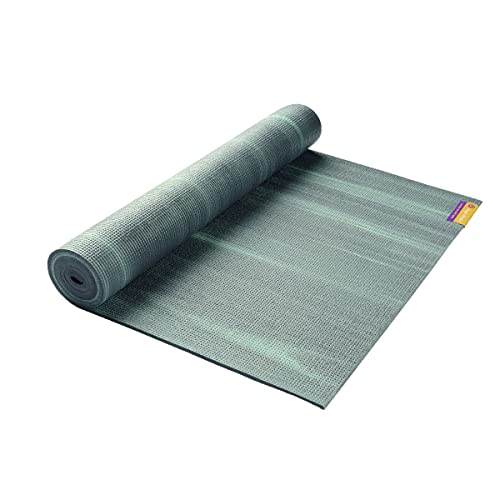
The standard size of a yoga mat is about 68 inches long, 24 inches wide and 1/8 inch thick (roughly 180 cm by 61 cm by 3 mm). That is the size most manufacturers treat as the default, and it suits most adults of average height doing general practice. In this guide you will learn how to check whether that standard size works for your body, when a longer or wider mat makes more sense, and how thickness and material change the feel under your hands and knees.
What Is the Standard Size of a Yoga Mat?
When people search for the standard size of a yoga mat, they usually want a single set of numbers. The common reference points are:
Shopping for one? See our guide: Liforme Yoga Mat Sale: Is It Worth It? Review (2026).
- Length: 68 inches (173 cm) to 72 inches (183 cm). Many standard mats are 68 inches; some are 71 or 72 inches.
- Width: 24 inches (61 cm) for most standard mats.
- Thickness: 1/8 inch (3 mm) to 1/4 inch (6 mm) for general use, with thinner mats for stability and thicker mats for cushioning.
These are conventions, not a formal standard set by any single body. Manufacturers publish their own dimensions, so a “standard” mat from one brand can differ by an inch or two from another. Always check the listed measurements before you buy.
How to Check Whether the Standard Size Fits You
The fastest way to decide is to compare your height with the mat length. A mat that is too short forces your head, hands or feet off the edge during poses. A mat that is far too long wastes space and can slide more on hard floors.
Step 1: Measure your height
Stand against a wall with your heels, back and head touching it. Mark the top of your head, then measure from the floor to that mark. Write the number down in inches or centimeters.
Step 2: Lie down and test the length
Lie on the floor as if you were in corpse pose (savasana) and extend your arms overhead. Check whether your fingertips and toes stay on the mat. Then do a forward fold and a downward-facing dog. If your hands or feet regularly leave the mat, you need more length.
Step 3: Choose a length based on your height
Use this as a starting guide. Add a few inches of margin for poses that stretch the body, such as upward-facing dog and wide-legged forward folds.
| Your height | Suggested mat length |
|---|---|
| Under 5 ft 4 in (163 cm) | 68 in (173 cm), standard |
| 5 ft 4 in to 5 ft 10 in (163 to 178 cm) | 68 to 72 in (173 to 183 cm) |
| Over 5 ft 10 in (178 cm) | 72 in (183 cm) or longer, or an extra-long mat |
Step 4: Decide on width
The 24-inch standard width works for most people. Choose a wider mat, often 26 to 30 inches, if you have broad shoulders, practice a lot of wide-legged poses, or simply want more room to move without the mat shifting. A narrower mat, around 22 to 23 inches, saves space and weight but gives less room for your hands and feet during balances.
Step 5: Pick a thickness for your joints
Thickness affects both cushioning and balance. The usual options are:
- 1/16 to 3 mm: Thin and firm. Good for balance and a strong connection to the floor, but less padding for knees and wrists.
- 4 to 5 mm: A common middle ground for general home and studio practice.
- 6 mm and up: Extra cushioning for sensitive joints or restorative work. These can feel unstable in standing balances.
If you have knee, wrist or back concerns, check with a physical therapist or doctor before choosing a thickness.
Factors That Change the Right Size
The standard dimensions are a starting point. Several factors may push you toward a different choice:
- Practice style: Ashtanga and vinyasa often use a grippy, medium-thickness mat. Yin and restorative practices may call for more length and padding.
- Floor type: On carpet or uneven surfaces, a thicker mat can help. On hard floors, a thinner mat often grips better.
- Portability: A standard-length mat is usually easy to carry in a bag. Extra-long or extra-wide mats can be harder to transport.
- Shared space: If you practice in a small room, a narrower mat may fit better.
Common Mistakes When Choosing a Mat Size
- Buying the standard size without checking your height first.
- Choosing the thickest mat available, which can make balance poses feel wobbly.
- Ignoring width. Many people focus only on length and then struggle in wide stances.
- Assuming all brands use identical dimensions. Always read the product specifications.
- Forgetting that a mat can shift on a slick floor, which matters more with a larger or heavier mat.
Tips for Getting the Most From Your Mat
- Lay your mat flat in your practice space before you commit to a size, using tape or chalk to outline it.
- Test a few key poses: downward dog, warrior II, half moon and corpse pose.
- Keep a spare towel or mat cover if you plan to sweat heavily, so the surface stays usable.
- Clean your mat according to the manufacturer’s instructions to keep the grip consistent.
- Re-check your size if you change practice style or move to a different floor surface.
Recommended Gear
If you want to keep your mat in good shape and carry it easily, these types of accessories are worth considering:
- Mat carrier strap: A simple strap lets you carry a standard mat over your shoulder without a bag. View on Amazon
- Mat bag: A padded bag protects the mat from dust and scuffs during travel. View on Amazon
- Mat towel: A microfiber towel placed on top of the mat absorbs sweat and adds grip in hot classes. View on Amazon
- Mat cleaner spray: A gentle, plant-based spray helps you clean the surface without degrading the material. View on Amazon
FAQ
What is the standard size of a yoga mat in inches?
Most standard yoga mats measure 68 inches long, 24 inches wide and about 1/8 inch thick. Some brands offer 71 or 72 inches in length.
What is the standard size of a yoga mat in centimeters?
The common metric equivalent is about 173 cm long by 61 cm wide, with a thickness of roughly 3 mm.
Is a 68-inch mat long enough for tall people?
It may not be. If you are over about 5 ft 10 in, a 72-inch or longer mat usually gives better coverage for lying poses and forward folds.
Is 24 inches wide enough?
For most people, yes. Wider mats are helpful if you have broad shoulders or do many wide-legged poses.
What thickness is standard?
Most general-purpose mats are between 4 and 5 mm. The 1/8 inch (3 mm) figure is common for travel and stability-focused mats.
Do all brands use the same dimensions?
No. Measurements vary slightly between manufacturers, so check the listed length, width and thickness before buying.
Should I choose a thicker mat for knee pain?
A thicker mat may add cushioning, but it can reduce balance. If you have joint pain, consult a doctor or physical therapist for personalized advice.
Conclusion
The standard size of a yoga mat, about 68 by 24 inches at roughly 3 to 5 mm thick, suits many adults. Measure your height, test the length in a few key poses and consider width and thickness based on your practice and floor. A little checking up front makes your mat feel comfortable for years.
Related reading
- Yoga Mat Extra Wide: How to Choose the Right Size in 6 Steps (2026)
- Regular Yoga Mat Size: How to Choose the Right Length, Width and Thickness
- Yoga Mats for Beginners
- Yoga Mat for Yin Yoga: 4 Best Picks for Slow, Floor-Based Practice
- Yoga Mat for Restorative Yoga: 6 Factors and Steps to Choose and Use One
- Yoga Mat for Pilates: How to Choose the Right One in 6 Steps
Ready to choose one?
About Claire Whitaker
Claire Whitaker is part of our editorial team and reviews and edits our yoga guides, checking product details against manufacturer specifications and owner feedback.