
 By Claire Whitaker
Updated November 2026
The Gaiam Essentials Yoga Mat is a 6mm, non-slip mat with a textured surface and a carrying sling, aimed at people who want an affordable, all-purpose mat for yoga, Pilates and floor workouts at home. It suits beginners, people practicing a few times a week, and anyone who wants a light mat they can move between a bedroom, living room or studio class without much fuss. It is less suited to advanced practitioners who want a dense, sticky mat for hot or vigorous flow, people who need extra cushioning for knees or wrists, and anyone who wants a long, extra-wide mat for two-person or large-body use. This review is based on manufacturer specifications and patterns in owner feedback rather than hands-on testing.

Gaiam Essentials Yoga Mat, 6mm Non-Slip with Carrying Sling (Black) | Textured non-slip surface for grip & traction. Lightweight 6mm cushioning for yoga, Pilates & floor workouts.
Product Overview
The Gaiam Essentials Yoga Mat is a general-purpose exercise mat sold under Gaiam’s Essentials line. Its listing name describes it as a 6mm mat with a textured non-slip surface, designed for yoga, Pilates and floor workouts, and packaged with a carrying sling. Gaiam is a long-established brand in home fitness and yoga accessories, and this model sits at the entry level of its mat range, positioned for everyday use rather than specialized practice.
The mat is built to be a straightforward, low-fuss option. Its main selling points are the thickness, which is enough to take the edge off hard floors without making standing balance poses feel unstable, and the textured surface, which is meant to keep hands and feet from sliding during downward-facing dog, lunges and seated work. The included sling lets you roll the mat up and carry it over the shoulder, which matters if you attend classes or practice in more than one room.
Because it is a Gaiam Essentials product, you should expect a mat that prioritizes accessibility and general function over premium materials, dense cushioning or specialized surface technology. That trade-off is the core of how to evaluate it.
Key Features & Specifications
The table below lists the specifications named in the product listing. Where the listing does not state a measurement, we have left it out rather than estimate it.
| Feature | Detail |
|---|---|
| Brand | Gaiam Essentials |
| Thickness | 6mm |
| Surface | Textured, non-slip |
| Color | Black |
| Carrying | Included carrying sling |
| Intended uses | Yoga, Pilates, floor workouts |
| Product type | General-purpose exercise mat |
A 6mm thickness sits in the middle of the common range for exercise mats. It is thicker than the thin travel mats many people use for outdoor or hot-yoga practice, and thinner than the cushioned mats marketed for joint comfort. For most floor-based work, 6mm gives a reasonable balance between stability and padding. If you want a deeper breakdown of how thickness affects practice, see Yoga Mat Thickness Guide and Yoga Mat How Thick: Standard Thickness and How to Choose (2026).
The non-slip texture is the main functional feature. Textured surfaces are generally designed to improve grip for hands and feet, especially when sweat is present, though grip depends on the surface you place the mat on and whether it is clean. Manufacturers do not typically publish coefficient-of-friction data for mats like this, so treat the non-slip claim as a general design intention rather than a measured guarantee.
Pros & Cons
Pros
- 6mm cushioning is a practical middle thickness for yoga, Pilates and floor exercises.
- The textured surface is designed to reduce sliding for both hands and feet.
- The included carrying sling makes it easy to transport to class or between rooms.
- A lightweight construction, as described in the listing, makes it easy to move and store.
- Sold under an established fitness brand, with a simple single-color design.
- Suits a wide range of general floor exercises, not just yoga.
Cons
- 6mm may feel thin for people who need extra padding for knees, wrists or hips.
- Entry-level materials mean it is unlikely to match the grip or durability of premium mats.
- It is not described as extra long or extra wide, which may limit taller users.
- Owners who practice very hot or sweaty sessions sometimes report that textured surfaces hold dirt and need regular cleaning.
- The listing does not publish detailed material composition, which may matter if you are sensitive to certain plastics or odors.
Performance Analysis
Performance for a mat like this comes down to three things: how well it cushions, how well it grips, and how well it holds up over time. Each is worth examining against what the specifications suggest and what owners commonly describe.
Cushioning and Comfort
At 6mm, the mat offers enough padding for most standing poses, seated stretches and core work on a hard floor. In general, mats in this thickness range give you a clear sense of the floor beneath you while still softening pressure on the spine, hips and knees during lying-down work. People who kneel frequently, such as in cat-cow, tabletop or some Pilates exercises, may notice that 6mm feels firm over long sessions. Adding a folded towel or a dedicated knee pad is a common workaround for those who want more cushion without buying a thicker mat.
Grip and Stability
The textured surface is designed to limit sliding during standing and transitional poses. Grip performance tends to be strongest on clean, dry mats and can decline as oils and sweat build up. Owners of textured mats frequently report that periodic wiping with a mild cleaner restores grip. For those who practice in warm rooms or perform fast flows, grip is the feature most likely to vary from session to session, and it is worth testing on your own floor before committing to a long routine.
Durability and Maintenance
Entry-level exercise mats generally hold up well under normal home use, but they can show wear faster under heavy use, frequent sweating or contact with abrasive surfaces. Common owner feedback for mats in this category points to keeping the mat away from direct sunlight and high heat, rolling rather than folding it for storage, and wiping it down after each session. The included sling helps with transport but does not protect the mat from wear, so rolling it carefully and avoiding dragging it across rough floors will extend its life.
Portability
The lightweight design and carrying sling are the mat’s strongest practical features for people who move between locations. It is easy to carry to a class, store in a closet or take on short trips. For larger or heavier mats, portability becomes a real concern, so this is a clear advantage for the Essentials model if your priority is convenience.
Because this is a research-based review, these observations reflect the specifications and common owner themes rather than personal testing. If you are choosing a mat for a specific medical need, such as joint pain or a recent injury, consult a physical therapist or your doctor before relying on any single mat for support.
Who Should Buy This Product?
This mat is a good fit for beginners who want a reliable, affordable first mat and do not yet know which thickness or texture they prefer. It also suits people who practice yoga, Pilates and general floor workouts at home several times a week and want one mat for all of them. If you commute to classes or move your mat between rooms, the included sling and light weight are real advantages.
You should probably skip it if you need significant padding for knees, wrists or spine, since 6mm may feel too firm for long holds or kneeling-heavy sequences. Advanced practitioners who want a dense, high-grip mat for hot or fast-moving practice may also find better options elsewhere. People who are very tall, or who want a mat for two people, should check dimensions carefully before buying, because the listing does not describe an extra-long or extra-wide format.
For readers who are still deciding on a general purpose mat, Yoga Mats for Beginners and Yoga Mat for Home Practice: How to Choose the Right One (Step-by-Step) walk through the decision in more detail.
Buying Guide
Before you buy any mat, decide what you will use it for most often. Yoga practitioners who sweat heavily often prioritize grip. People who kneel a lot often prioritize cushion. Those who travel often prioritize weight and packability. The Gaiam Essentials model is strongest for general home use, so it is a good match when those priorities line up.
- Check thickness against your joints. If your knees or wrists need extra padding, consider a thicker mat or an added pad.
- Measure your space and height. Confirm the length and width fit your body and your floor area, especially if you are taller than average.
- Test grip on your floor. Textured mats behave differently on wood, tile and carpet. Place the mat where you will use it and check for slipping during a few standing poses.
- Consider how you will carry and store it. A sling is convenient for travel, but it does not protect the mat from wear, so think about where it will live between sessions.
- Review care requirements. Most textured mats need regular wiping. If you practice hot or sweaty, plan to clean more often.
If you want a different balance of thickness and features, several well-known alternatives are worth comparing. The Gaiam Essentials Thick Yoga Mat is a 10mm option with an easy-cinch carrier strap, aimed at users who want more cushioning for kneeling and lying-down work.
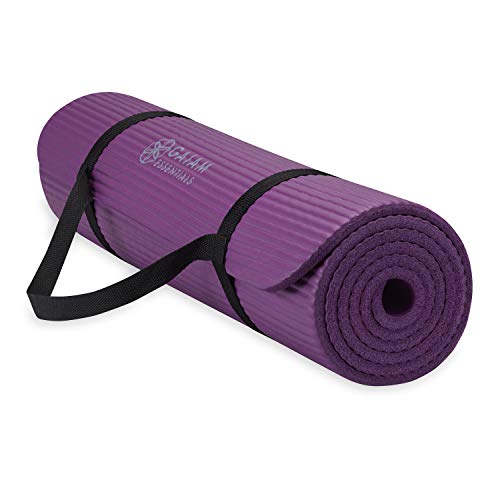
Gaiam Essentials Thick Yoga Mat Fitness & Exercise Mat with Easy-Cinch Carrier Strap, Purple, 72"L X 24"W X 2/5 Inch Thick, 10mm
For a Gaiam option closer in thickness to this model but with a solid-color design, the Gaiam Premium Yoga Mat in 5mm, with an easy-cinch strap, is another point of comparison. It is worth weighing thickness and surface feel against how you practice.

Gaiam Premium Yoga Mat, 5mm Non-Slip Exercise Mat (Sagebrush) | Solid Color Non-Slip | 5mm PVC Cushion | Easy-Cinch Carrying Strap | Yoga, Pilates & Floor Workouts | 68"x24"
For more on choosing a mat for specific settings, see Yoga Mat for Outdoors: How to Choose and Use One on Grass, Sand and Decks (2026) and Yoga Mat and Case: How to Choose and Use One for Safe Travel (2026).
FAQ
Is the Gaiam Essentials Yoga Mat thick enough for yoga?
At 6mm, it offers enough cushioning for most yoga poses on a hard floor, including standing, seated and balance work. People who need extra padding for kneeling or lying-down poses may want a thicker mat or a separate pad.
Does the mat stay in place during practice?
The textured surface is designed to reduce sliding for hands and feet. Grip depends on the floor surface and how clean the mat is, so test it on your floor and wipe it down regularly for the best results.
Is it suitable for Pilates and floor workouts as well as yoga?
The listing describes it for yoga, Pilates and floor workouts. Its 6mm thickness and textured surface make it a general-purpose option for these activities, though people who do many core or kneeling exercises may want extra padding.
Does the mat come with a carrying strap?
Yes, it includes a carrying sling. This makes it easy to transport the mat to classes or between rooms at home.
How should I clean and store the mat?
Wipe the surface with a mild cleaner after each session and let it air dry. Store it rolled rather than folded, and keep it away from direct sunlight and high heat to help it last.
Is this mat good for beginners?
It is a practical choice for beginners because it is affordable, lightweight and suited to a wide range of general exercises. Beginners who experience joint discomfort should consider a thicker mat and consult a healthcare professional if pain persists.
Can I use it outdoors?
It can be used outdoors on a clean, flat surface, but textured mats can collect dirt and debris, and prolonged sun or heat can affect the material. For outdoor use, read Yoga Mat for Outdoors: How to Choose and Use One on Grass, Sand and Decks (2026) before deciding.
Final Verdict
The Gaiam Essentials Yoga Mat is a sensible, general-purpose option for people who want a 6mm non-slip mat for yoga, Pilates and floor workouts at home, along with a sling for easy carrying. It is a good starting point for beginners and for anyone who values portability and a simple design. It is less suited to people who need significant cushioning, very long or wide dimensions, or premium grip for hot and fast-moving practice. Check the thickness, dimensions and grip against how you practice, and consult a professional if you have joint or injury concerns.
View on AmazonAbout Claire Whitaker
Claire Whitaker is part of our editorial team and reviews and edits our yoga guides, checking product details against manufacturer specifications and owner feedback.




