By Claire Whitaker
Updated November 2026
The best yoga sequence builder free of charge is the one that matches how you actually plan your practice, whether you teach classes or build routines for yourself at home. This list weighs five resources on how clearly they organize poses, how easily you can reorder a flow, and whether they help you think through pacing, transitions and balance across a session.
Best overall: Yoga Sequencing: Designing Transformative Yoga Classes – View on Amazon
Our Top Picks
Quick Comparison
| Product | Best for | Key feature |
|---|---|---|
| Yoga Sequencing: Designing Transformative Yoga Classes | Teachers building classes | Principles of class structure |
| Yoga Teacher Class Planner | Teachers logging classes | Sequence builder pages |
| Yoga Guide for Beginners | Beginners at home | 101 ready-made sequences |
| The Top 100 Best Yoga Poses | Pose reference | Broad posture library |
| Yoga Beyond Exercise | Mindful, reflective practice | Wellness-focused framework |
Yoga Sequencing: Designing Transformative Yoga Classes

Yoga Sequencing: Designing Transformative Yoga Classes
Best for: Building logical, well-paced class sequences from the ground up.
This book suits teachers who want to understand why one pose leads to the next, not just which poses to list. It explains how to plan peaks, transitions and cool-downs so a class has a clear arc.
Pros
- Explains the reasoning behind sequencing decisions
- Useful for planning themed classes
Cons
- Reads more like a teaching manual than a digital tool
Yoga Teacher Class Planner

Yoga Teacher Class Planner: Quick & Easy 50 Yoga Classes Logbook with Asana/Posture Sanskrit Names and Yoga Sequence Builders for Vinyasa Hatha Yoga Instructors & Yoga Teachers in Training
Best for: Teachers who want to plan and record classes on paper.
This planner suits instructors and trainees who prefer writing out a flow by hand and tracking what they taught over time. It includes space to log classes and map out sequences.
Pros
- Pages for sequence building and class logging
- Includes Sanskrit posture names for reference
Cons
- Paper-based, so it cannot reorder poses automatically
Yoga Guide for Beginners
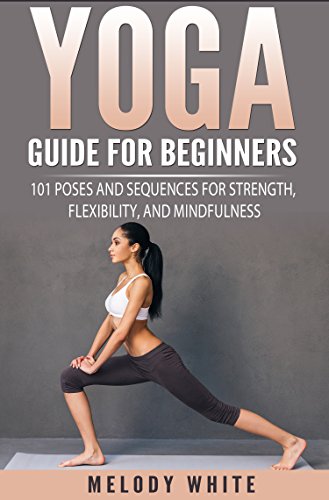
Yoga Guide for Beginners: 101 Poses and Sequences for Strength, Flexibility and Mindfulness
Best for: Home practitioners who want ready-made routines to follow.
Newer students often find it easier to start from a complete sequence than to build one from scratch. This guide offers 101 poses and sequences organized by goal.
Pros
- Many sequences already arranged by level
- Clear focus on strength, flexibility and mindfulness
Cons
- Fixed routines leave less room for custom building
The Top 100 Best Yoga Poses

Yoga: The Top 100 Best Yoga Poses: Relieve Stress, Increase Flexibility, and Gain Strength (Yoga Postures Poses Exercises Techniques and Guide for Healing Stretching Strengthening and Stress Relief)
Best for: Looking up individual poses when assembling your own flow.
This reference works well alongside a planner. It describes a wide range of postures so you can select options that fit a specific goal, such as stress relief or strength.
Pros
- Large library of postures in one place
- Covers stretching, strengthening and relaxation poses
Cons
- Does not provide a finished sequencing system
Yoga Beyond Exercise

Yoga Beyond Exercise: A Wellness Journey in Singapore
Best for: Reflective practitioners who want to connect movement with intention.
This title frames yoga as a wider wellness journey. It suits readers who build sequences around breath and mental focus rather than only physical goals.
Pros
- Strong emphasis on mindfulness and intention
- Helpful framing for theme-based sessions
Cons
- Less practical detail on pose-by-pose sequencing
Buying Guide
Pose Library Depth
Check whether the tool or resource covers the poses you actually use, including standing, seated, inversions and restorative shapes. A broader library gives you more options when you plan around a specific goal.
Flow and Reordering
Consider how easily you can move poses around. Digital builders typically allow drag-and-drop changes, while printed resources require you to rewrite or erase.
Timing and Pacing
Look for guidance on how long to hold each pose and how to build toward peak postures. This matters most for teachers planning a class of a set length.
Level and Audience
Match the resource to your experience. Beginners usually benefit from ready-made routines, while teachers often need principles they can adapt.
Good picks for this: Yoga Sequencing and Yoga Guide for Beginners
FAQ
Is a free yoga sequence builder as useful as a paid one?
Free options can cover the basics of arranging poses, but paid tools may add larger libraries and more customization. Compare features against what you need before deciding.
Do I need a sequence builder if I already know yoga?
Experienced practitioners sometimes prefer to plan on paper or from memory. A builder helps most when you want to save, reuse or share routines.
Should I consult a professional before starting a new routine?
Yes, especially if you have an injury, joint pain or a medical condition. A qualified instructor or healthcare provider can advise which poses are appropriate for you.
Conclusion
For teachers designing classes, Yoga Sequencing and the Yoga Teacher Class Planner are the most directly useful. Home practitioners who want structure may prefer Yoga Guide for Beginners, while The Top 100 Best Yoga Poses works well as a pose reference. Yoga Beyond Exercise suits those who want to build sequences around intention. For more ideas, see Yoga Sequence for Beginners PDF: A Step-by-Step Guide for Home Practice and Yoga Slow Flow Sequence: A Step-by-Step Guide for Beginners.
Related reading
- Yoga Sequence for Summer Solstice: 6 Best Books and Planners Compared (2026)
- Yin Yoga Poses Sequence: 3 Best Books for Home Practice in 2026
- Pitta Pacifying Yoga Sequence: 3 Best Books for Cooling Practice
- Flow Yoga Sequence Builder: How to Plan a Routine in 6 Steps
About Claire Whitaker
Claire Whitaker is part of our editorial team and reviews and edits our yoga guides, checking product details against manufacturer specifications and owner feedback.